
 Fabrication and Fixturing: The Center of Manufacturing Precision
 Fabrication and Fixturing: The Center of Manufacturing Precision
Whether you’re building cars, launching satellites, or designing medical devices, one truth holds: quality parts demand quality fabrication.
From CNC machining to custom fixture design, fabrication forms the bridge between engineering vision and operational reality.
Companies that invest in expert fabrication and fixturing solutions don’t just meet standards; they exceed them, gaining a competitive edge in speed, quality, and cost efficiency.
Overview of Fabrication
Fabrication is the process of converting raw materials into final components or subassemblies through cutting, machining, welding, and assembling. It’s the hands-on side of engineering, combining skilled labor, advanced tools, and intelligent design to bring products to life.
But fabrication isn’t just about creating a part; it’s about creating the tools and fixtures that help make that part correctly, every time.
For industries that rely on precision manufacturing fixtures for quality assurance, the right fixture design can make the difference between success and scrap.
Importance of Fabrication and Fixturing
Manufacturers often focus heavily on end parts, forgetting that fixtures, tools, and gauges form the backbone of accurate, repeatable production. Poorly designed fixtures can introduce flaws into otherwise perfect components.
High-quality custom manufacturing fixtures for quality assurance support:
- Faster setup and reduced operator error
- Consistent part alignment and repeatability
- Reduced scrap and rework
- Accurate inspection and testing conditions
In high-stakes industries like automotive, aerospace, and medical, these improvements translate into real competitive advantages.
The Fabrication Process
Fabrication typically starts with a CAD model, where engineering teams outline every measurement, tolerance, and material spec. Using tools like Fusion 360 3D CAM, Reliable Analysis (RA) develops precise machining paths, simulates real-world behavior, and creates efficient designs ready for the shop floor.
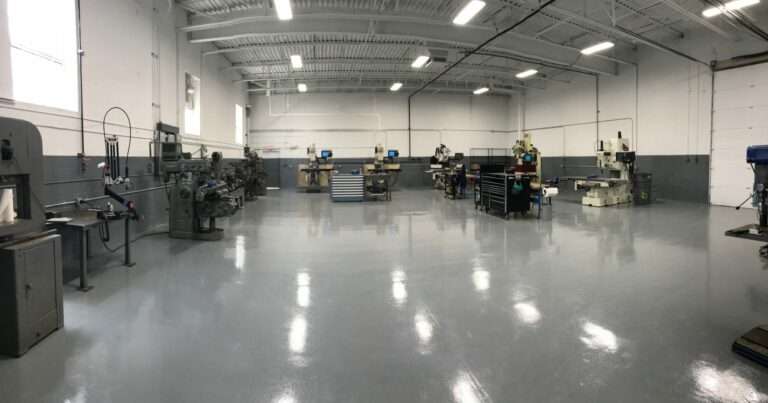
Next comes machining and welding, depending on the part. CNC machining services use a combination of vertical, horizontal, and combo mills to maintain accuracy across large and small components.
Welding is performed in-house using MIG and TIG welders for aluminum, steel, and custom alloys. These are perfect for both low-volume CNC machining and welding services as well as structural assemblies.
Finally, in-house CMM inspection validates the finished product, ensuring it matches the original intent. If needed, reverse engineering to recreate legacy parts or improve on outdated designs is offered.
Common Questions About Fabrication
What materials can be used in fabrication?
A wide range, from aluminum and steel to composites and polymers, depending on the application. Reliable Analysis’s equipment can cut up to 18” in diameter and machine parts over 5 feet long.
Is custom fixture design worth the investment?
Absolutely. Off-the-shelf fixtures rarely meet exact part tolerances or testing protocols. Reliable Analysis (RA) specializes in bespoke fabrication performed by specialists, ensuring that each fixture is built to spec and aligned with your unique needs.
Can fabrication support prototype development?
Yes. RA routinely supports prototype fabrication for industrial applications, helping clients iterate rapidly before committing to full production.
Relevance Across Industries
Fabrication services touch nearly every industry. But their role is especially pronounced in:
- Automotive fixture fabrication: where high-volume production demands precise fixturing
- Aerospace CNC machining services: where tolerances are microscopic and materials exotic
- Industrial equipment design and fabrication: supporting custom machinery, test rigs, and tooling
- OEM component fabrication: where custom solutions reduce lead times and dependency on external vendors
Applus+ Reliable Analysis: Fabrication as a Competitive Advantage
In today’s manufacturing landscape, fabrication isn’t just a service; it’s a strategic advantage. When design, machining, and inspection are integrated under one roof, projects move faster, costs drop, and the final product is better.
At Applus+ Reliable Analysis, end-to-end fabrication and fixturing is designed for speed, flexibility, and accuracy, leveraging decades of experience and top-tier equipment. Contact us if you’re interested in receiving a quote or learning more about how Applus+ Laboratories can assist with your testing and certification requirements.
Core fabrication capabilities include:
- CAD design and engineering using Fusion 360 software
- CNC machining on 3-axis mills (up to 60” x 25” x 25”)
- MIG and TIG welding of aluminum and steel
- CMM inspection and reverse engineering
- Prototype development for one-off or limited production runs
- Equipment and fixture development, including Instron, safety, and vibration fixtures
For more information on Reliable Analysis’s testing capabilities, please visit: